Lens: Feminist
" Of course, in my old fashioned, old world way, I, Jean-Jacques Humbert, had taken for granted, when I first met her, that she was unravished stereotypical notion of "normal child" had been since the lamented end of the Ancient World BC and its fascinating practices. We are not surrounded in our enlightened era by little slave flowers that can be casually plucked between business and bath as they used to be in the days of the Romans; and we do not, as dignified Orientals did in still more luxurious times, use tiny entertainers fore and aft between mutton and the rose sherbet. The whole point is that the old link between the adult world and the child world has been completely severed nowadays by new customs and new laws."
As I've previously mentioned, Humbert enjoys referring to himself in the third person and as someone who is wise with poise. He starts of by comparing Lolita's old-self to the "fascinating practices" of the Ancient World. Much like the Ancient World that fell apart, he refers to Lolita and her "fascinating practices" to be falling apart as she changes and grows up. He explains that maybe before she was more of a "normal child", but he acknowledges that because of her exposure to sexual things, this led to her sexual encounters at camp which stir her away from the idea of a "normal child".
He then goes on to describe her as a "slave flower", which could also be used to describe his feelings about her because he literally thinks she is beautiful like a flower, but also could be used to describe how because he is her guardian she is also like his personal slave now. In literal terms, I slave flower is a bracelet with a flower
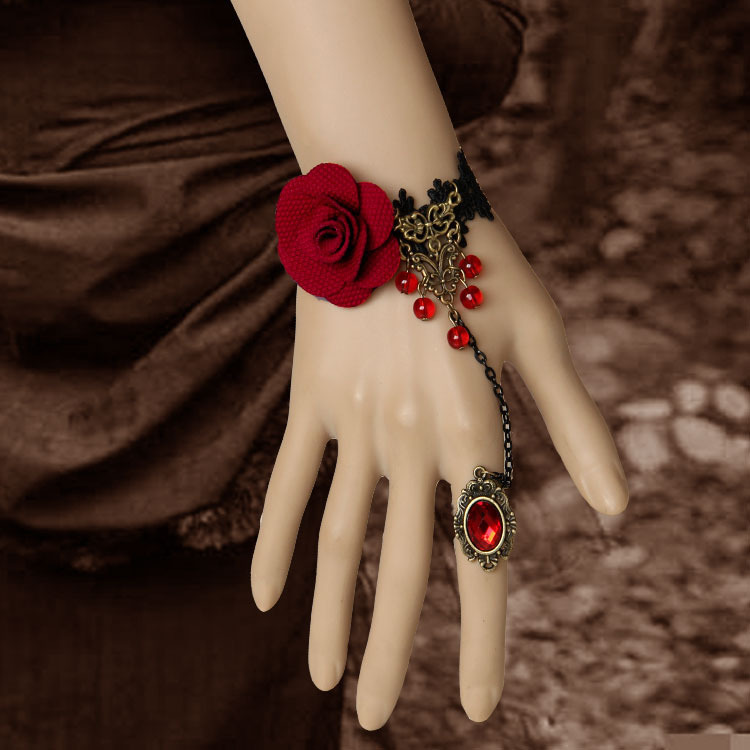
One can see that even this slave flower has a sensual feel to it.
Humbert makes the connection of how the rules and laws are now compared to the Roman days, which are famous for young prostitution. Roman prostitutes started off as young as 12 years old and carried that profession throughout their lives until they would eventually die of a sickness or old age. Humbert includes the words "casually plucked between business and bath". This could make it seem that it was easy for a pedophile to have sex with a young girl and fit it into their daily schedule, instead of having to go around it like he does now. He wishes that this sort of ancient world were to still exist then the relationship between a male and a young female would not be considered taboo. He relates that the adult world and child world, which back in this "ancient world" used to coexist together, has now been "severed" by the laws. He believes that these laws only serve as a barrier to stop him from getting what he is interested in: sex. Everything Humbert does and comparisons he makes boils down to the fact that he is interested in a sexual life with her. He is not interested in her feelings about other things or her interests. As he mentions that she was like any other child, he has limited interest in her. He only noticed her when she started sexually maturing and when she told him about her sexual encounters at camp. Much like the slave flower, Lolita is captivated by Humbert's hold because she is so young. If she were to disagree with anything Humbert is doing or has done, she would have limited say. By making this comparison, Humbert shines light to his tone and his overall perception of Lolita. It is important to note that he thinks of her like this slave flower and that he is only upset because he did not realize how innocent she was until she wasn't.

No comments:
Post a Comment