Friday, June 5, 2015

blog post #8: final reflection


Lolita is a novel about a story told through a book written by Humbert Humbert while in prison, about his life and events around his childhood, his relationships, and his relationship with Lolita. Humbert's attraction to young girls originates from a childhood trauma, losing his first love, Annabelle, to a fatal sickness. He had never gotten over Annabelle, and felt attracted to girls with similar features, of that of a child. Decades after her death, Humbert had moved to America, where he met Lolita after moving in as a tenant with her mother. He marries Lolita's mother in order to stay close to Lolita, his new "Annabelle". After an accident takes Lolita's mother, Humbert spends time around the United States with his new relationship with Lolita. The dynamic of power is what brought Lolita to stay with Humbert until she leaves with another older man. Humbert spends years tracking down the one who was "stolen" from him, and eventually finds her, pregnant,  and without the man who had taken her and left her to end up murdering him, and being arrested.

My lens, psychoanalytical, pushed me to step back from my own views, and look through the views of the teller of the story, Humbert Humbert. My understanding of the lens did not change what I thought of the lens  itself, but did change how I had perceived the novel. Although I will never sympathize with Humbert's actions, I do understand why they were committed.
If I had chosen another lens, I do not believe I would take as much time to assess why Humbert was doing what he was doing, as I would have to what he was a doing and focus on punishment. I do not believe I missed things from the novel, as my focus, psychoanalytical, is what I believe captures most from the book than all the other lenses.
I believe this because of what was said in the beginning of the book,  the "people of the jury",  the audience that will read this book through the eyes of Humbert, and analyze and assess his point of view with their own, which is what the book, and the novel itself, is intended for. This lens might not be perfect for other books, and the downsides would be that I would focus too much on the why of the events rather than the events themselves. Again, my beliefs had not changed towards the behaviors of Humbert, or any person who Humbert could potentially symbolize, but I do know that actions are not caused on their own. I do believe that Humbert believed he wasn't as guilty as many would think of him without knowing the cause of his actions, which is why he wrote this book in prison, but I do not excuse his actions. 

blog post #7: responding and reflecting

"I may have lost contact with reality for a second or two--oh, nothing of the I-just-blacked-out sort that your common criminal enacts; on the contrary, I want to stress the fact that I was responsible for every shed drop of his bubbleblood; but a kind of momentary shift occurred as if I were in the connubial bedroom, and Charlotte were sick in bed. Quilty was a very sick man. I held one of his slippers instead of the pistol--I was sitting on the pistol. Then I made myself a little more comfortable in the chair near the bed, and consulted my wrist watch. The crystal was gone but it ticked.The whole sad business had taken more than an hour. He was quiet at last. Far from feeling any relief, a burden even weightier than the one I had hoped to get rid of was with me, upon me, over me. I could not bring myself to touch him in order to make sure he was really dead. He looked it: a quarter of his face gone, and two flies beside themselves with a dawning sense of unbelievable luck. My hands were hardly in better condition than his. I washed up as best I could in the adjacent bathroom. Now I could leave. As I emerged on the landing, I was amazed to discover that a vivacious buzz I had just been dismissing as a mere singing in my ears was really a medley of voices and radio music coming from the downstairs,"(304).

Humbert has just murdered Quilty, who had "taken" Lolita away from him. Humbert had shot him in cold blood after a short struggle between the two. What was very disturbing is that after shooting him, Humbert was disappointed that he did not feel any relief that he was hoping he would have felt. He even tried to make himself more comfortable in the same room. He sees that a quarter of his face has been blasted off, yet Humbert still makes a mental note of not wanting to check if he was dead. Considering Humbert pursued relations with a young girl, this would lead me to believe that he was mentally ill, and his emotionless state after killing another man in cold blood, confirms my thought.


blog post #6: responding and reflecting

I can't read any scenes with Lolita without anger. Every page to which she is seen as "promiscuous" or a "tease" I think, she is only twelve years old. A child.  A child that is objectified by this man. A child, a child, a child. You cannot describe her any different. The thoughts and analyzations of my fellow classmates also struck me the wrong way. Many describe Lolita as a sexual deviant, or you could also say nymphet, as Humbert describes these girls. Again, this story is being told through the eyes of a man that is attracted to children. He is describing this girl as if she was an adult, and you have to remind yourself of the perspective you are reading from. Reading through the psychoanalytical lens,  I tell myself this, and wonder if this was the aim of Vladimir Nabokov. To see how the readers will perceive Humbert and his perspective. To see if they take his perspective as fact, or remind themselves of his bias. In the beginning of the book he states that Lolita "seduced" him, but this is only due to his attraction and sexualization of young girls in the first place so he takes advantage of her attraction to him. I want to further explain the age and power dynamic I mentioned in an earlier blog post. Children cannot consent due to their age because they are unable to understand their certain situations and decisions put upon them. There is an imbalance of power because the adult, in this case Humbert Humbert, can easily put thoughts into a child's head, about what is right and what is wrong because of the authority they have. Lolita continues her behavior because Humbert allowed her to, he let her believe that she is consenting, that the relationship is okay.

blog post #5: responding and reflecting

Humbert Humbert is an extremely disturbed man. Reading Lolita through the psychoanalytical lens had made me look for specific traits in Humberts character. Throughout the beginning chapters of his story, Humbert speaks about his life, and his encounters with the women in his life. Many of the 'women' he speaks about are not women at all, but young girls. Young innocent children, his targets, potential victims, and his victims.

However, reading through the psychoanalytical lens makes me realize that those that I identify as victims to this horrible man, are seen through a different light in his eyes. He does not see these children as victims. When he speaks of Monique, the "nymphet" he speaks of his attraction to her, of how she made him feel specifically because of how she looked. He does not see her mentality, her as a victim, her feelings. He just sees what he wants to see. He does however mention earlier that he would never mess with a child's "innocence", and that makes me think, does he believe he is not doing wrong considering he does have some sort of 'moral'?

His objectification of young girls only goes as far as pursuing sexual relations when the younger party willingly goes along with it. (Monique, and eventually Lolita).  I use the word 'willingly' very loosely here because of the age and power dynamic that is present in these relationships. Especially with Monique, due to her being a, possibly underage, prostitute.  What are the psychological effects of her doing this job, and what are the reasons behind her pursuing this job in the first place at such a young age? We don't get to know this, because again, we are reading through Humbert Humbert's eyes. He doesn't consider these thoughts, because of his attraction, and because he see's her doing this job as her full consent.

Monday, May 18, 2015

blog post #4: critical lens expert


        There are many of those that disagree with Sigmund Freud and his theories on the human mind, one of those who challenged his beliefs, was Vladimir Nabokov. In an excerpt written by Leland De La Durantaye's, he explores these disagreements between Nabokov and Durantaye, and Nabokov's attempt in testing his theories through Lolita. Durantaye believes that your past has a greater influence on your present, and that that past will affect your general outlook and current emotions. Humbert Humbert, the main character, was a sort of 'guinea pig' through these tests, more specifically towards that the person you turn out to be is not necessarily influenced by the person you once were or grew up as.


Saturday, May 16, 2015

Critical Lens Expert #7

Book: Lolita
Lens: Feminist


In Elizabeth Patnoe's Lolita Misrepresented, Lolita Reclaimed: Disclosing the Doubles we see her bringing up various points that the average reader would not have noticed. An important speculation to note is that according to Google's definition, Lolita is a "sexually precocious young girl" while this is accurate, it gives readers and people who have read the book a misinterpretation of what it actually means. Patnoe questions why definitions like this aren't things like" a molested adolescent girl", but rather suggest words such as seductive and sexual in the definitions.
 She believes that most readers fall into these traps because their ignorance and lack of perspective. She believes that although interpretations of Lolita are established with predetermined ideas, it does not help that they fall anymore victim to it. Patnoe blames Humbert's manipulative character and rhetoric as the key to why it is constantly misinterpreted. She tells readers not to fall victim to the ways in which he tries to convince the readers that Lolita is sexual or that any of the sexual encounters were her idea, because again he is a sociopath and will do anything to get his way or have people think how he wants them too. A big concept that she mentions is the idea of consent in the novel. She states that because Lolita and Humbert are not on the same page intellectually it would be harder to get her consent on the acts they performed as she is still young and does not know what many things are until she experiences them. One example is when they are first starting to have sex and although she does not explicitly state that she wants to have sex with him, she tiptoes around the idea but asking Humbert if he has ever done "this" as a kid. What "this" is- is left unclear and leads us to believe that she might be talking about something sexual like sex itself, but because Humbert is the narrator we do not know what she was referring to.
   Because of this lack of perspective and how the readers fall victim to Humbert and his acts for sympathy sometimes it makes it harder to realize that she is still a child and it makes it harder to relate this back to our own lives. She mentions that she's asked fathers about Lolita and they use the excuse that she was sexually-experienced or that she was a sexual girl to excuse Humbert's behavior. But when asked what they would do if their 12-year old daughter was having sex with Humbert or someone like him, their responses immediately changed and they then understood more about where Patnoe was coming from with this.
   In relation to the book, a big difference is the way the events are perceived. I can confidently say that many of the readers would have taken Humbert's unreliability lightly and believed every story that he has told. For example, the instance where he says that them having sex was her idea, many readers might believe that to be so, but thinking back to when one was 12, it is hard to believe her wanting to have sex. Patnoe's interpretation has helped me further my reading by putting many things into perspective in terms of consent and how Humbert is manipulative. By having these two factors in mind, it will help the reader understand the view with a clear mind.

Friday, May 15, 2015

Critical Lens Close Reading #6

Book: Lolita
Lens: Feminist


" Of course, in my old fashioned, old world way, I, Jean-Jacques Humbert, had taken for granted, when I first met her, that she was unravished stereotypical notion of "normal child" had been since the lamented end of the Ancient World BC and its fascinating practices. We are not surrounded in our enlightened era by little slave flowers that can be casually plucked between business and bath as they used to be in the days of the Romans; and we do not, as dignified Orientals did in still more luxurious times, use tiny entertainers fore and aft between mutton and the rose sherbet. The whole point is that the old link between the adult world and the child world has been completely severed nowadays by new customs and new laws."  

      As I've previously mentioned, Humbert enjoys referring to himself in the third person and as someone who is wise with poise. He starts of by comparing Lolita's old-self to the "fascinating practices" of the Ancient World. Much like the Ancient World that fell apart, he refers to Lolita and her "fascinating practices" to be falling apart as she changes and grows up. He explains that maybe before she was more of a "normal child", but he acknowledges that because of her exposure to sexual things, this led to her sexual encounters at camp which stir her away from the idea of a "normal child".
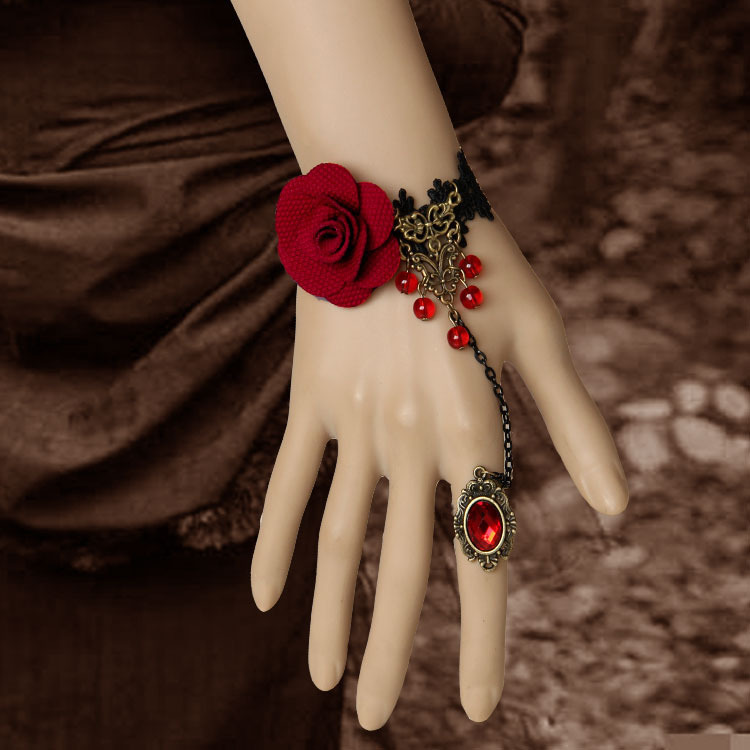
   He then goes on to describe her as a "slave flower", which could also be used to describe his feelings about her because he literally thinks she is beautiful like a flower, but also could be used to describe how because he is her guardian she is also like his personal slave now. In literal terms, I slave flower is a bracelet with a flower
One can see that even this slave flower has a sensual feel to it. 
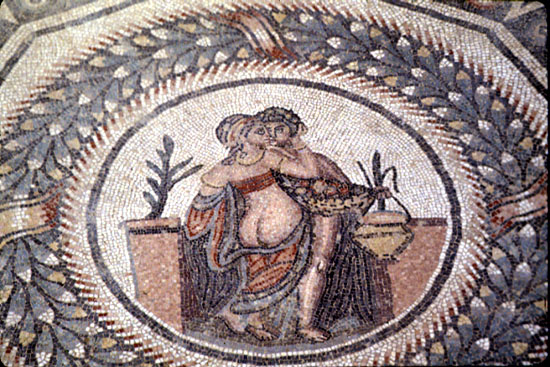
Humbert makes the connection of how the rules and laws are now compared to the Roman days, which are famous for young prostitution. Roman prostitutes started off as young as 12 years old and carried that profession throughout their lives until they would eventually die of a sickness or old age. Humbert includes the words "casually plucked between business and bath". This could make it seem that it was easy for a pedophile to have sex with a young girl and fit it into their daily schedule, instead of having to go around it like he does now. He wishes that this sort of ancient world were to still exist then the relationship between  a male and a young female would not be considered taboo. He relates that the adult world and child world, which back in this "ancient world" used to coexist together, has now been "severed" by the laws. He believes that these laws only serve as a barrier to stop him from getting what he is interested in: sex. Everything Humbert does and comparisons he makes boils down to the fact that he is interested in a sexual life with her. He is not interested in her feelings about other things or her interests. As he mentions that she was like any other child, he has limited interest in her. He only noticed her when she started sexually maturing and when she told him about her sexual encounters at camp. Much like the slave flower, Lolita is captivated by Humbert's hold because she is so young. If she were to disagree with anything Humbert is doing or has done, she would have limited say. By making this comparison, Humbert shines light to his tone and his overall perception of Lolita. It is important to note that he thinks of her like this slave flower and that he is only upset because he did not realize how innocent she was until she wasn't.